

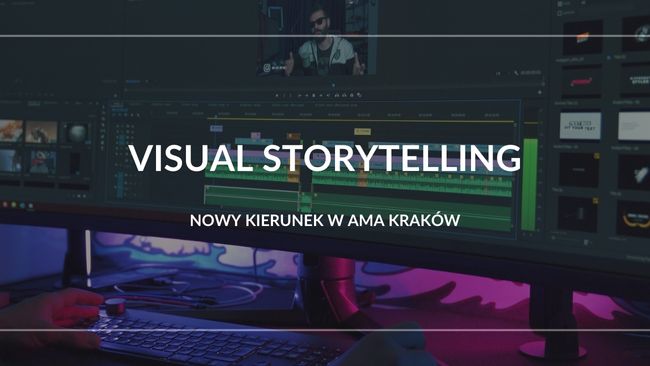
AMA Visual Storytelling – Direction of Education
SAVINGS
Visual Storytelling is a modern direction unique to the AMA Film Academy, combining classic filmmaking techniques (directing, cinematographic art, post-production) with future technologies and new media culture.
It’s a program for creators who want to tell stories with images – whether in cinema and television , or in the world of YouTube, TikTok, Instagram, OTT streaming, Virtual Production and AI-driven content.
Students learn how to move from an idea and script through set and post-production to distribution and monetization of content in various formats and across multiple platforms.
State-of-the-art teaching direction
The Visual Storytelling program combines the fundamentals of filmmaking with the practice of working in a Next Gen Media environment. Students learn and apply:
🎬 Film and classical direction:
- storytelling and screenwriting,
- Working with the actor, dramaturgy, staging,
- The director’s workshop as a project leader.
📷 The art of cinematography and image technology:
- Camera, light, composition, image texture,
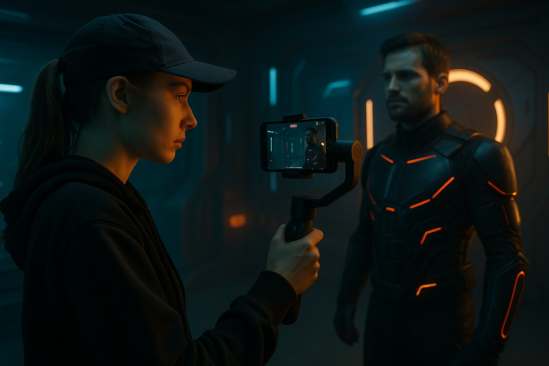
- Camera work on the move (steadicam, gimbal, drone),
- Visual style and authorial creation of light.
💻 Post-production and new pipelines:
- Narrative editing, rhythm and pace,
- color grading (SDR/HDR, ACES),
- VFX and compositing,
- real-time imaging and integration with Unreal Engine.
🤖 AI and creative automation:
- previz (animatics), captions and transcriptions,
- AI roto, upscaling and cleanup,
- Reference shot generation and styling,
- AI-assisted editing and prompt-to-scene workflows.
🌐 Next Gen Media and Creator Economy:
- Social media storytelling (YT Shorts, TikTok, IG Reels),
- growth, thumbnail science, SEO and platform algorithms,
- branded content and advertising,
- OTT & streaming delivery (Netflix, SkyShowTime, Amazon, YouTube, festivals).
🎥 Modern production technologies:
- Virtual Production (LED volume, in-camera VFX, camera tracking),
- green screen & compositing,
- real-time pipelines (TouchDesigner, p5.js, live visuals),
- Safety in working with drones and operator equipment.
Current records

Krakow
Part-time
Visual Storytelling 1st Degree
Visual Storytelling at the AMA is a school for the next generation of creators – combining cinema, new media and AI into a single art of opowi…
Stationary
Warsaw
Visual Storytelling 1st Degree
Visual Storytelling at the AMA is a school for the next generation of creators – combining cinema, new media and AI into a single art of opowi…
Structure of the program
The course is divided into 3 degrees (2 semesters each), each of which ends with a thesis and an AMA diploma:
- Semester 1 (Foundations) – learning the entire process and roles (director, cinematographer, post-production). In semester 2, students choose the area in which they begin to specialize.
- Level II (Advanced) – narrative development, profiling (Directing / Cinematographic Art / Post Production), working in teams on films and content for brands.
- Level III (Master) – author’s project (12-20 min film or series), own style, work with Virtual Production and AI workflows, preparation for the professional industry.
Flexibility
- Specialization starting from the 2nd semester – each student chooses a path (Directing, Cinematographic Art, Post Production), but maintains an interdisciplinary understanding of the whole process.
- Possibility to enter from a higher level – candidates with experience (e.g., cinematographers, editors, directors) can start from Level II or III after passing the entrance exam.
- Portfolio and diploma after each degree – already the completion of the first degree gives you a ready portfolio and practical competence to work in the industry.
Purpose of the program
An AMA Visual Storytelling graduate is a Next Gen Audiovisual Creator – aware of the language of film and narrative, proficient in camera work and post-production, yet ready to operate in the world of social media, new technologies and the international film industry.
AMA Visual Storytelling – 3 Degree Comparison
| Area | I degree (Foundations, 2 semesters) | II degree (Advanced, 2 semesters) | Degree III (Master, 2 semesters) |
|---|---|---|---|
| Target | Learning the basics of film language, directing, cinematography and post-production. Role rotation, foundation building. | Development of own style and first serious film projects. Specializing in Directing / Art of Cinematography / Post Production. | Development of authorial narrative language. Diploma project at the professional level (festivals, OTT, social). |
| Directing | – Basics of screenwriting and storytelling.- Mastershot, staging of short scenes.- Working with an actor (dialogue, improvisation).- Directing simple fiction and documentary forms.- Storytelling for social media. | – Working with an actor (dialogue, group scenes).- Directing documentary, commercials, branded content.- Narrative dramaturgy in film and social.- Creating a treatment and shooting plan.- Directing showreel. | – Authorial style and narrative language.- Showrunning: writers’ room, show bible.- Directing a mini-series or festival film.- Crossmedia storytelling (VR/AR, interactive narratives). |
| The art of cinematography | – Camera, lenses, light basics.- Mastershot, in-camera editing.- Camera in motion (slider, gimbal – intro).- Reportage and creative photography.- Light realization in simple scenes. | – Visual style and look development.- Camera in motion: gimbal, drone, steadicam.- Operational work in commercials and music videos.- Narrative composition in multi-shot scenes.- Photography as a basis for aesthetics. | – Advanced look development (ACES, HDR).- Narrative light handling.- High-end operator pipelines.- Virtual Production on LED volume (tracking, ICVFX).- Integration of real actors with digital humans. |
| Post Production | – Narrative editing (Premiere/Avid).- Color grading basics.- Intro to VFX (green screen, keying).- QC and mastering of simple forms.- AI as Assist (previz, captions, cleanup). | – Advanced narrative editing.- Color grading (HDR basics, mood).- VFX and compositing (cleanup, CGI integration).- Finishing broadcast + social.- AI roto, audio enhancement, styling, dubbing (voice clone). | – CGI and VFX integration in live-action film.- HDR/SDR grading, OTT pipeline.- Realtime workflows (Unreal, VP).- AI workflows – character generation, dubbing, qlipsing, avatars.- AI pipeline automation. |
| Modern Next-Gen modules | – Story and formats (cinema vs. social).- AI previz, captions, cleanup.- Social mini-projects (YT, IG, TikTok). | – Virtual Production basics (UE, LED stage).- Creator Economy (algorithms, thumbnails, SEO).- AI dubbing and qlipsing.- Reference styling. | – Virtual Production advanced (LED, tracking, ICVFX).- AI generation of realistic characters and spaces.- Crossmedia (VR/AR, live visuals).- Ethics and AI (deepfake, provenance). |
| Semester projects | – Mastershot.- Dialogue scene.- Mini-project social (60-90 s, 3 formats).- Thesis: 5-7 min film or mini-series social (3×2-3 min). | – Feature scene with actor.- Cinematography assignment (camera in motion).- Post-production assignment (finishing, EU integration).- 3 episode social campaign.- Thesis: 8-15 min film or branded/social series (3-5 episodes). | – VP project (LED volume, tracking).- VFX/comp sequence.- HDR/SDR grading.- Crossmedia / interactive mini-project.- Diploma: original film 12-20 min or mini-series 3-5 episodes (release-ready). |
| The end result | The graduate knows the basics of all three areas (Directing / Cinematography / Post), has a portfolio and can enter the market as a junior filmmaker. | Graduates develop a specialization (Directing / Cinematographic Art / Post Production) and are ready to produce short films and social/pro content. | The graduate develops an authorial style and can produce a professional project at the festival / OTT level. He or she is ready to work as a director, cinematographer or Next-Gen Media post-producer. |